01Understand LPM
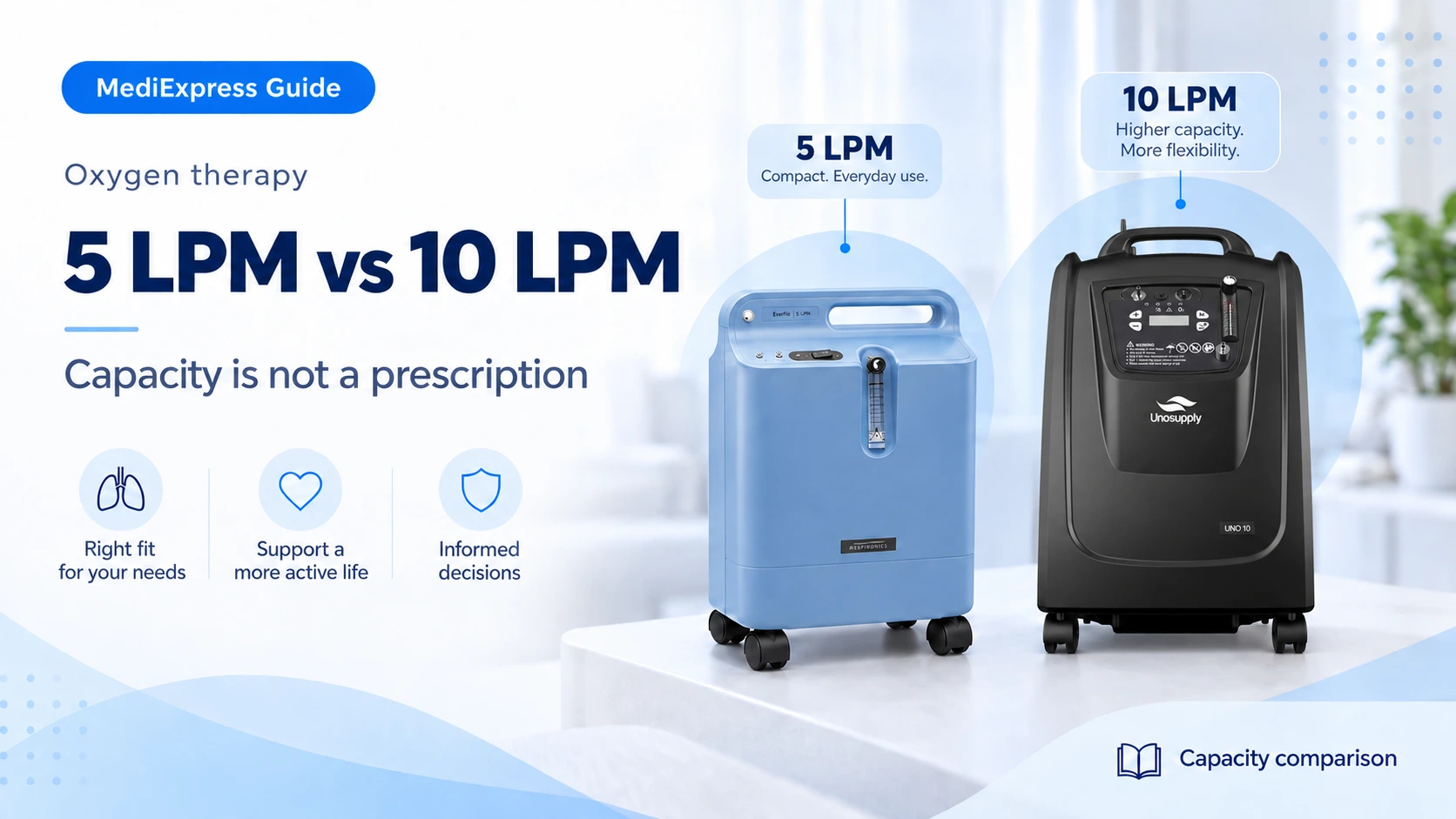
Litres per minute describes continuous oxygen flow. Confirm the required flow and delivery type with the prescribing clinician before comparing capacity classes.
02Check performance at the required flow
Ask for the oxygen concentration specification at the flow you need, along with outlet pressure and the model’s operating limits. Do not transfer a specification from a similarly named unit.
03Check outlets and accessories
A dual-outlet arrangement needs its own documented limits. Do not assume that two outlets each deliver the machine’s full rated capacity or that the equipment is suitable for two patients.
04Buy against an exact requirement
Ask for the model, electrical requirements, accessories, warranty and service arrangements in writing. A higher-capacity machine is not automatically the correct choice. Your clinician determines oxygen flow and any clinical changes.
05Read the rating as a capacity, not a recommendation
The litre-per-minute label describes a device capability. It does not tell a patient which flow to use or whether the unit meets every clinical requirement. Ask the supplier to confirm the specified oxygen concentration across the required operating range and show the current technical document. A higher-capacity unit can have different size, power and sound characteristics, so compare those details for your actual room and routine rather than choosing the larger number automatically.
- Match the prescribed continuous-flow requirement.
- Compare the exact model’s technical sheet.
- Check power, space and service arrangements as well as capacity.
06Check the package and demonstration
Ask which cannula or interface, tubing and other accessories are included and which are separate. Confirm that all connections match the supplied equipment and the clinician’s plan. At the demonstration, identify the normal indicators and the route for getting help with an alarm. If the device is being hired, make sure the agreed model and capacity appear on the rental paperwork. A clearly documented setup is easier for everyone in the household to support.
Sources & further reading
Use the current product instructions for the exact model and region.
Equipment education does not replace clinical advice. Your care team determines appropriate testing, therapy and settings.