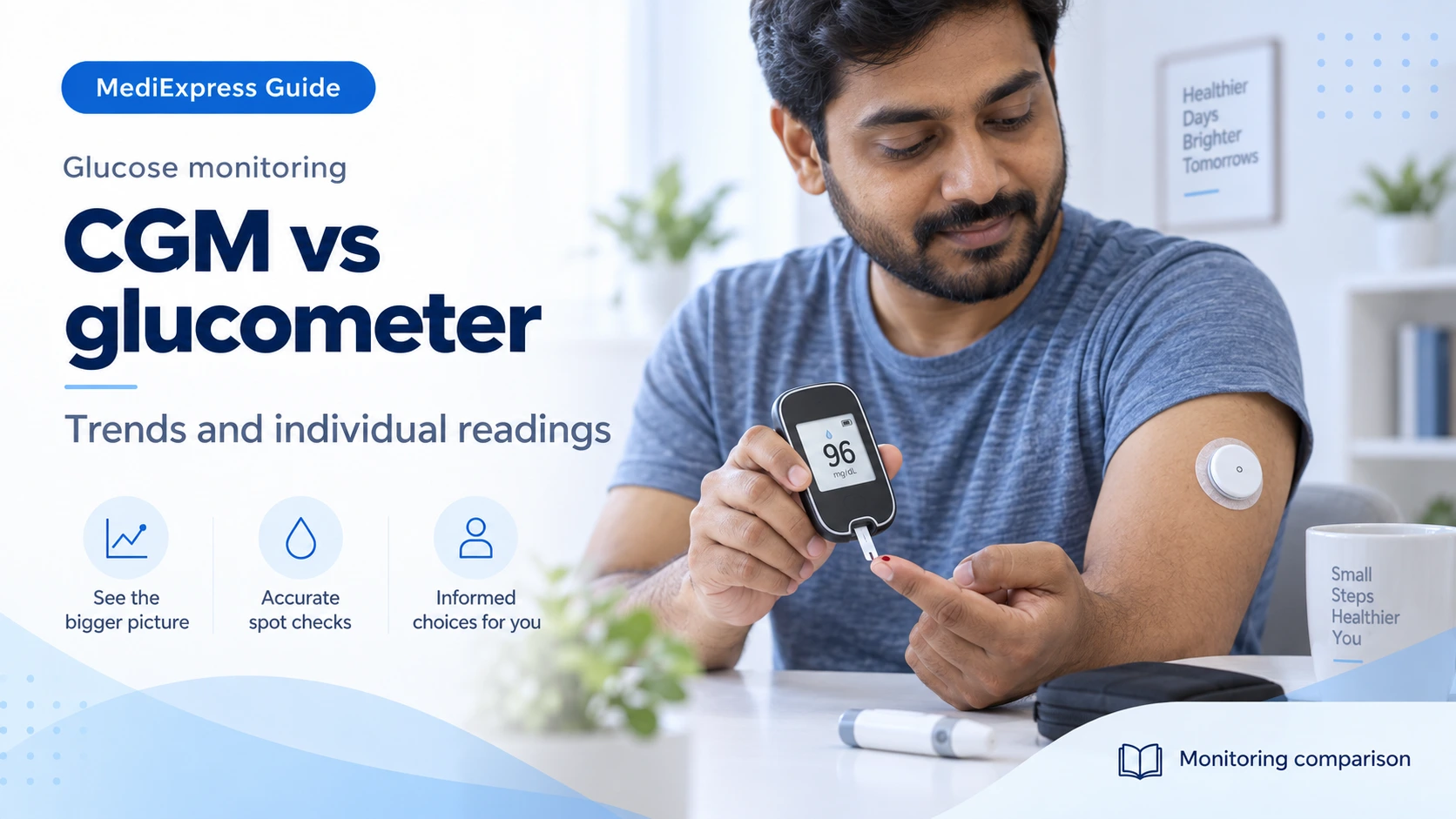
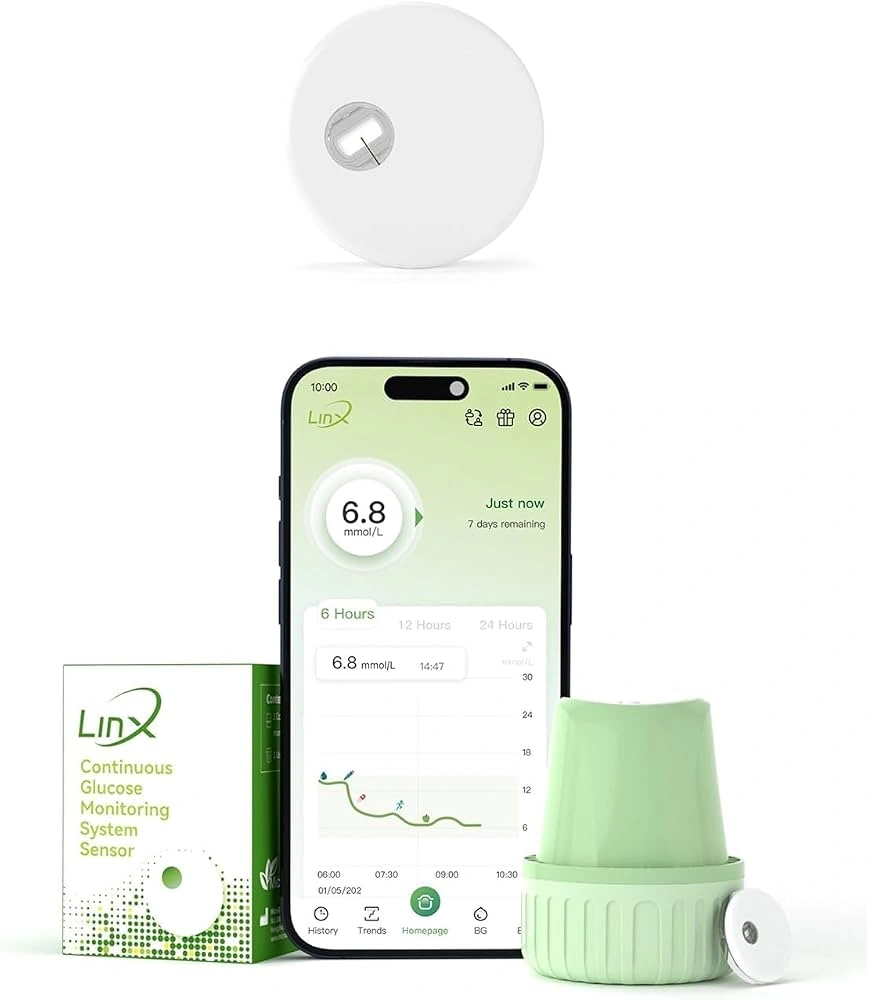
LinX sensor wear duration; intervals depend on the model.
Manufacturer details ↗Sinocare iCan i3 reading interval; other systems differ.
Manufacturer details ↗| Comparison | CGM | Blood glucose meter |
|---|---|---|
| Measurement | Interstitial glucose estimate | Blood sample |
| Main view | Trends over time | Reading at the time of testing |
| Consumables | Model-specific sensors | Matching strips and lancets |
01What each measures
A blood glucose meter tests a drop of blood. A CGM estimates glucose in the fluid between cells and records patterns over time. The values can differ, particularly when glucose is changing.
02Compare daily use
A meter needs its matching test strips and lancets. A CGM needs sensor replacement at the model-specific interval, a compatible reader or phone and the appropriate app. Compare recurring costs and support as well as the initial purchase.
03Check alerts and connectivity
CGM features vary by system and country. Ask whether readings arrive automatically or need scanning, what alerts are available and how data can be shared. Check your exact phone and operating system.
04When readings do not match symptoms
Follow the sensor instructions for checking a blood glucose reading and your clinician’s care plan. Do not ignore symptoms because a sensor value looks normal. This guide does not interpret individual glucose values or recommend medication changes.
05Compare a month of supplies, not one box
List the consumables each system needs and use the exact pack quantities in the quotation. For a meter, check the matching strips and lancets. For a sensor system, check the model-specific wear period, phone or reader requirements and what happens if a sensor needs support. A low initial device price can be misleading if the ongoing supplies or compatible reader are omitted. Ask for current local warranty and support information before ordering.
- Confirm the exact sensor or strip model.
- Check phone compatibility before buying a sensor.
- Keep a meter available when required by the sensor instructions and care plan.
06Bring useful questions to your clinical review
Ask how your clinician wants you to share records and which situations require a confirmatory blood glucose check. A continuous trace and an individual meter reading answer different questions; neither should be interpreted from a marketing graphic. Keep the product instructions accessible and follow your agreed care plan when readings and symptoms differ. The equipment team can help locate setup and compatibility resources, while decisions about targets, diagnosis and medication belong with your clinician.
Sources & further reading
Use the current product instructions for the exact model and region.
Equipment education does not replace clinical advice. Your care team determines appropriate testing, therapy and settings.