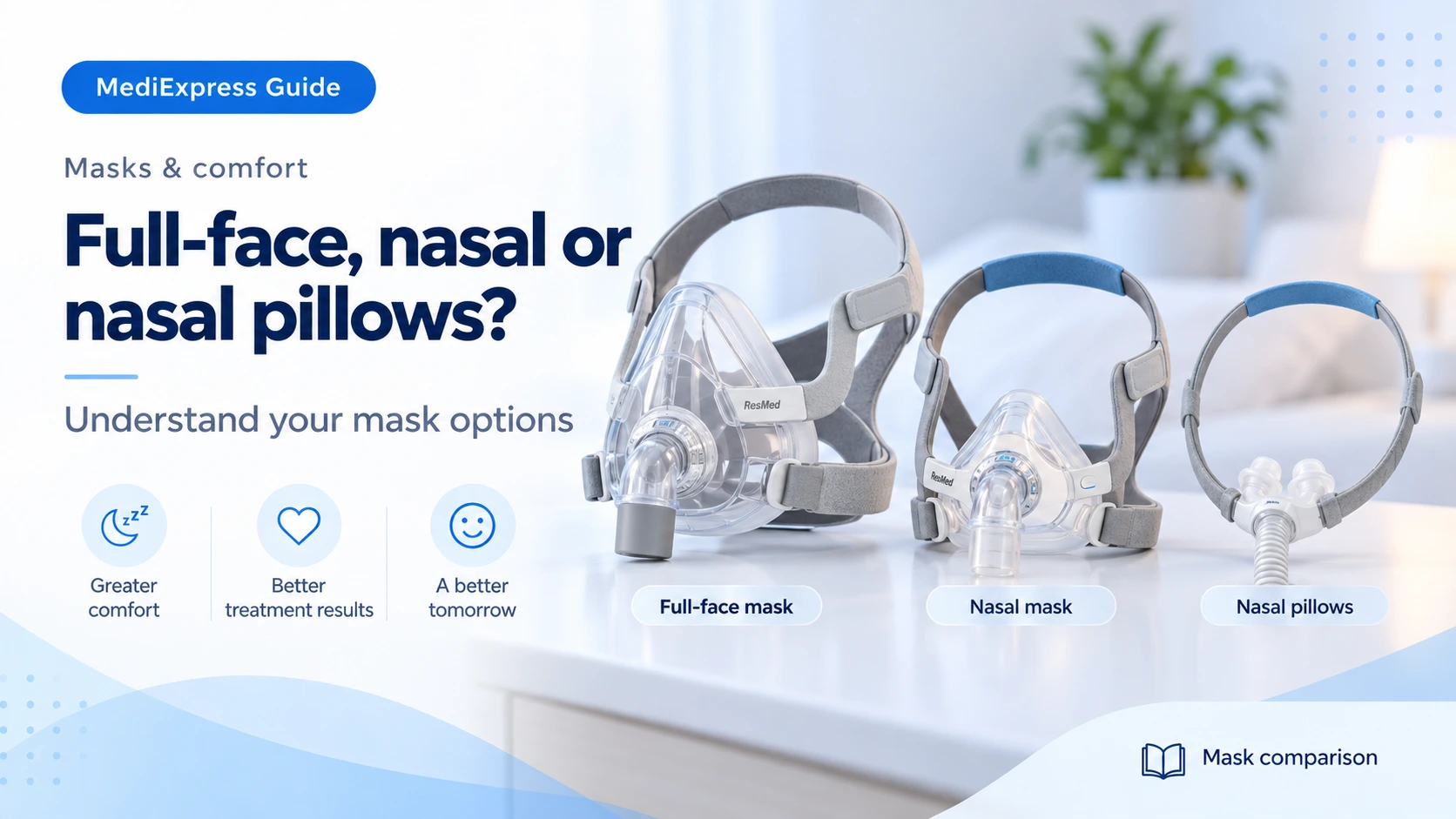
01Three common styles
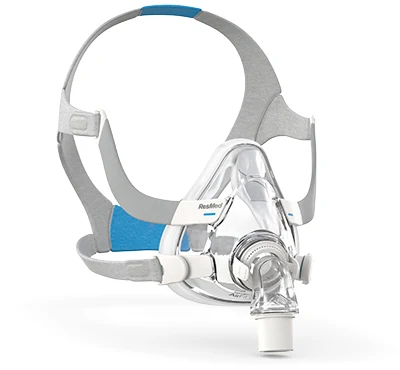
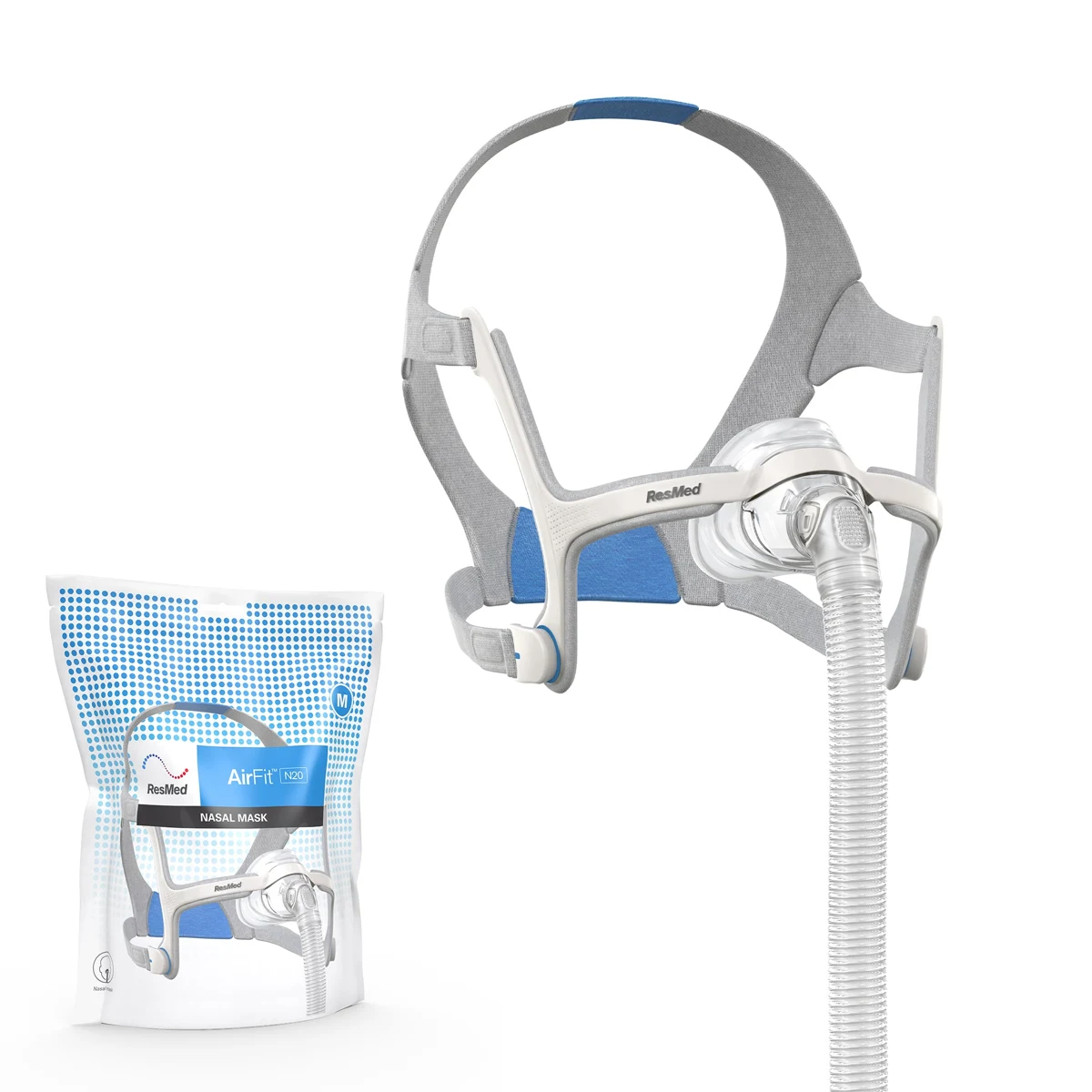
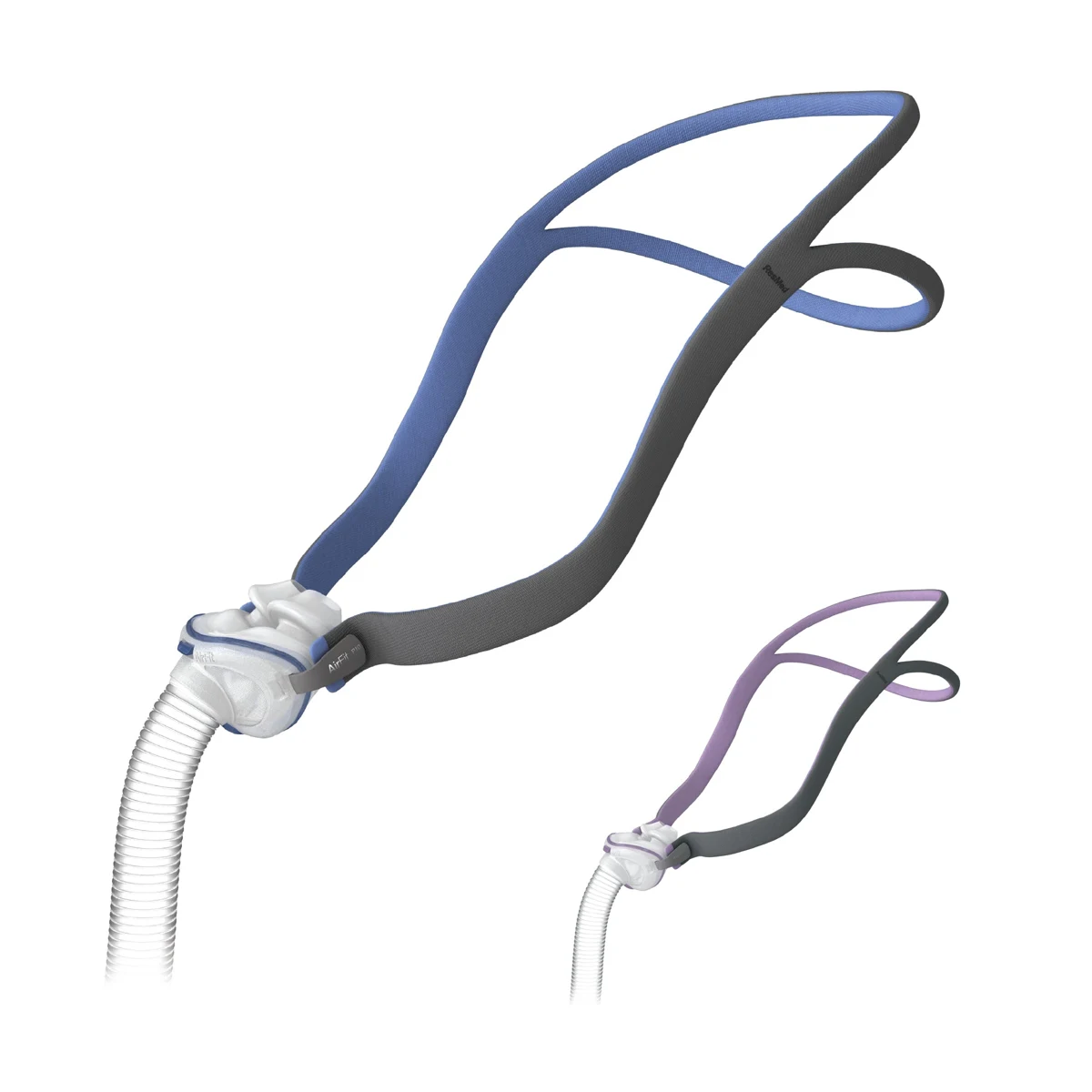
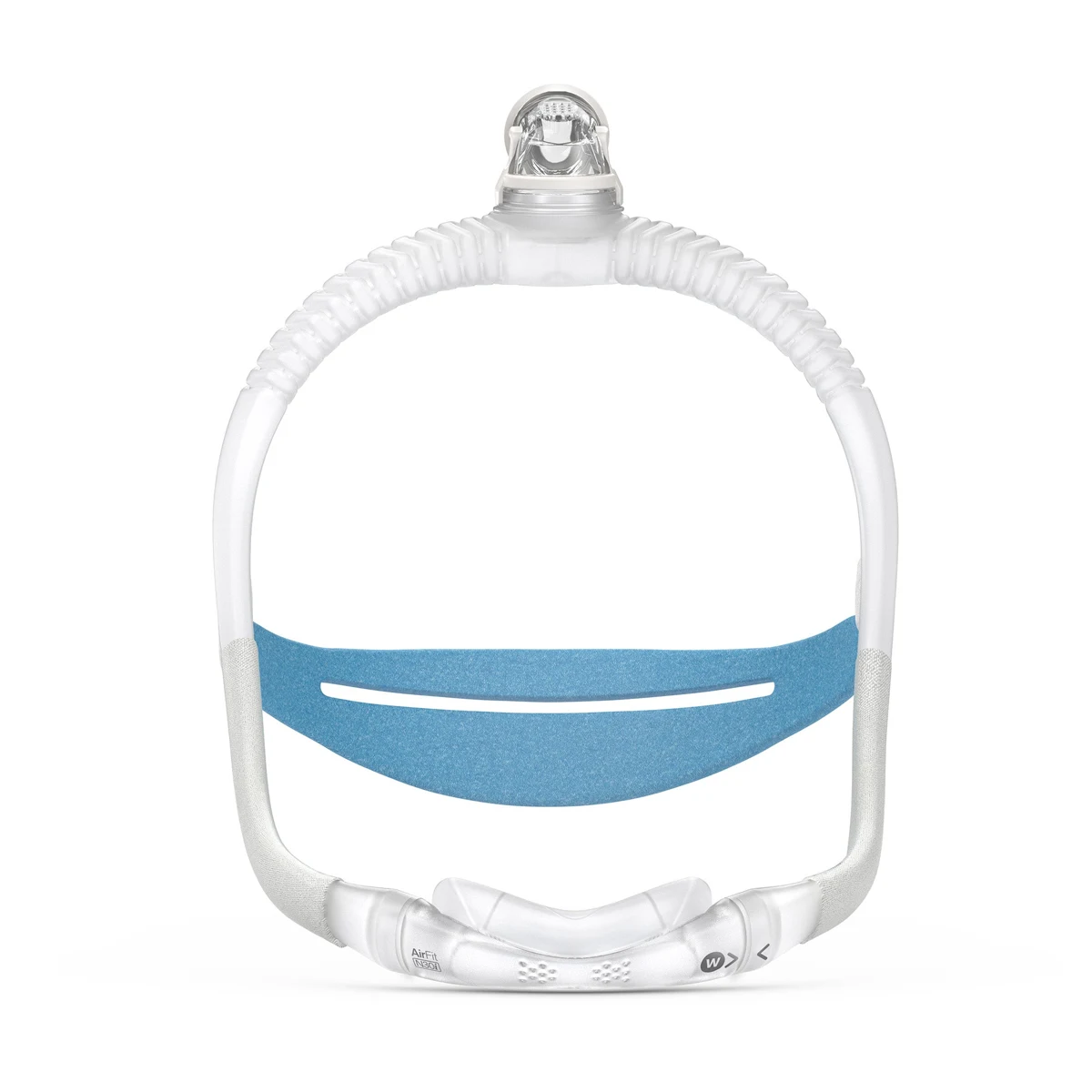
Full-face masks cover the mouth and nose or sit under the nose while covering the mouth. Nasal masks seal around or under the nose. Nasal pillows sit at the nostrils. Designs vary even within the same category.
02Connection position changes the feel
Front-connected masks route tubing from the front. Models such as AirFit N30i and F30i connect at the top of the head. Think about how the hose sits on your bed and how you move during sleep.
03Fit the exact model
Use the manufacturer’s model-specific sizing template. Have the fit checked with the intended machine setup; tightening the straps repeatedly is not a substitute for checking size, cushion condition and positioning.

04Check compatibility and safety
Confirm tubing and connectors, especially with AirMini. Some masks use magnetic clips and have specific contraindications. Read the current manufacturer safety instructions and discuss relevant implants or devices with your clinician before use.
05Build a shortlist around your routine
Think about the practical issues you want a fitting session to answer: whether you wear glasses before sleep, where the hose rests, which way you usually turn and which parts you find awkward to handle. Use those observations to compare interfaces with your clinical and equipment teams. Photographs show the shape, but they cannot tell you whether a particular cushion will seal comfortably on your face. A mask should be checked using its own fitting instructions and the intended therapy setup.
- Compare the cushion contact area and hose position.
- Ask how to remove and refit the mask for routine use.
- Check model-specific safety information before choosing.
06Know what a replacement order includes
The words mask, frame, cushion and headgear refer to different components. A listing with a photograph of a complete mask may still offer only a replacement cushion. When ordering, quote the full model and size, and ask for an itemised description. Keep a photograph of your packaging label for future enquiries. If the fit changes, ask whether the cushion is worn, the size is wrong or the assembly needs review before buying a different style.
Sources & further reading
Use the current product instructions for the exact model and region.
Equipment education does not replace clinical advice. Your care team determines appropriate testing, therapy and settings.