| Term | What to understand |
|---|---|
| CPAP | Continuous prescribed pressure |
| APAP | Pressure adjusts within a prescribed range |
| Bilevel | Separate inspiratory and expiratory pressures |
| ST / advanced NIV | Specific capabilities; confirm the prescribed mode and exact model |
01One pressure or two
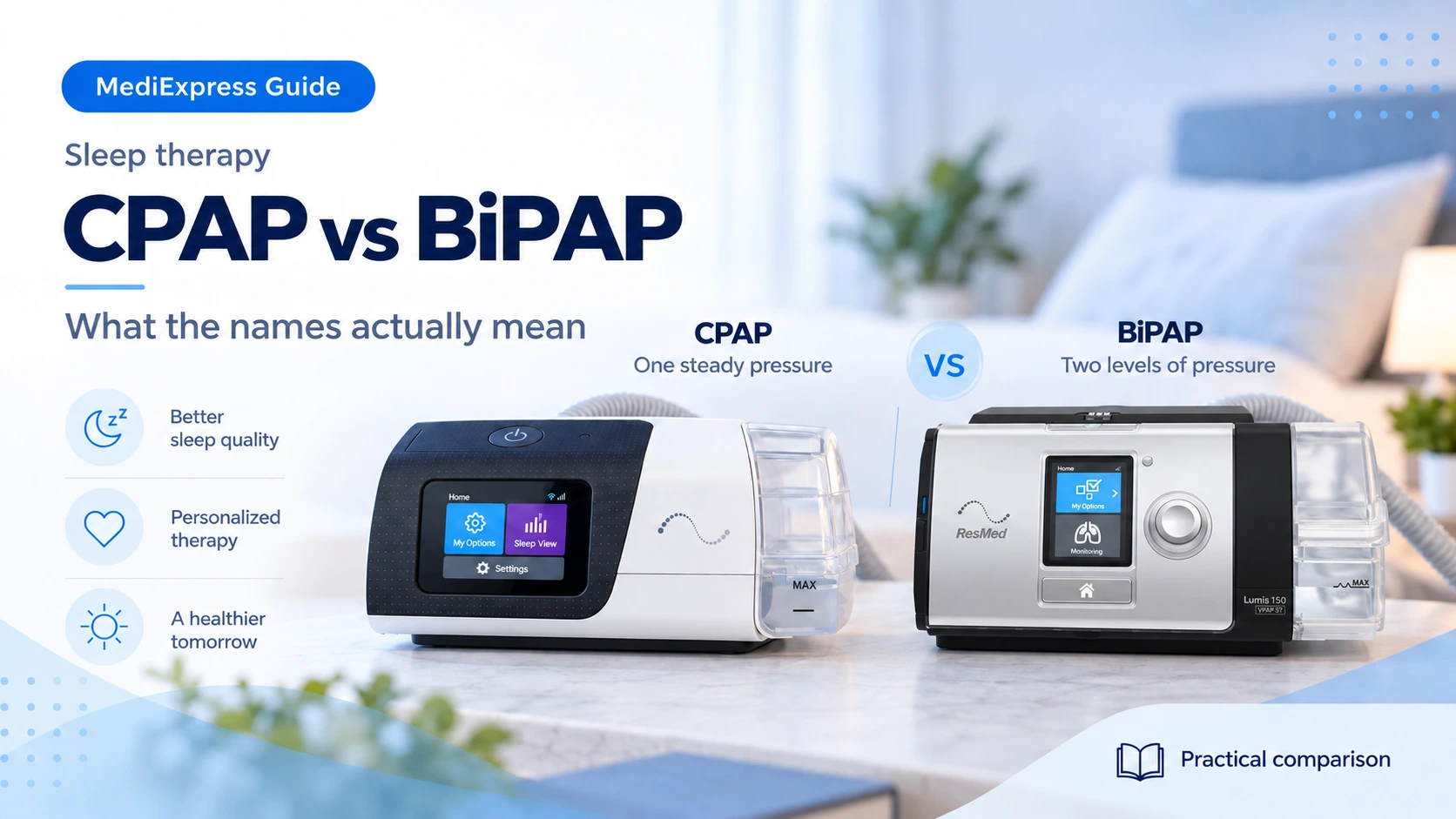
CPAP uses a continuous prescribed pressure. Bilevel provides an inspiratory pressure and a lower expiratory pressure. Automatic adjustment and backup timing are additional capabilities that depend on the exact model and mode.
02Why the model suffix matters
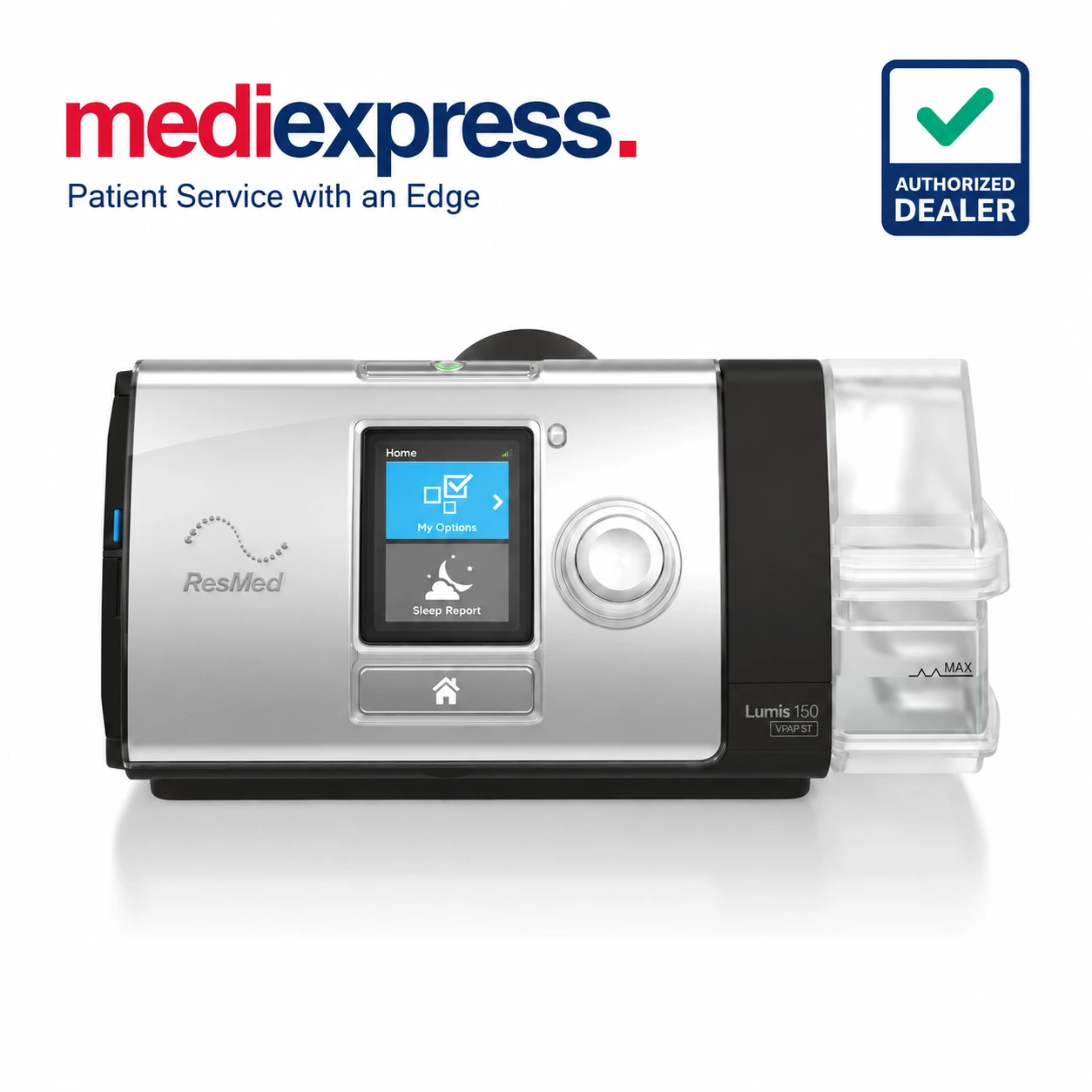
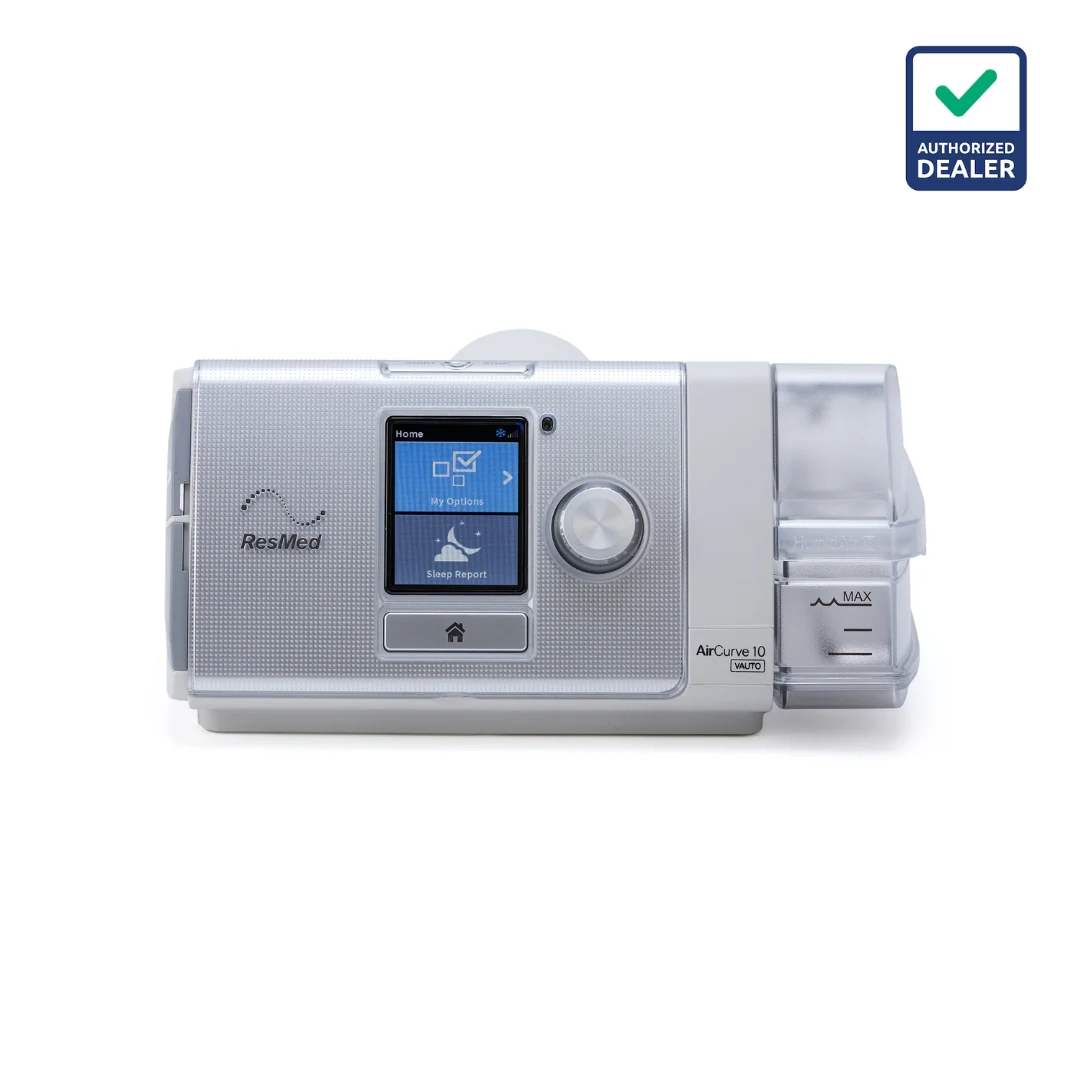
Names such as VAuto and ST identify different device capabilities. A VAuto device should not be treated as a substitute for a prescribed ST device. Features described on a product-family page may not be present on every model.
03What to bring to an enquiry
Bring the prescribed device or therapy type and the equipment list supplied by your clinical team. We can compare hardware, package contents, interfaces and service options without changing the treatment plan.
- Exact model or prescribed mode
- Interface and circuit requirements
- Humidification and power needs
- Care team contact for clinical clarification
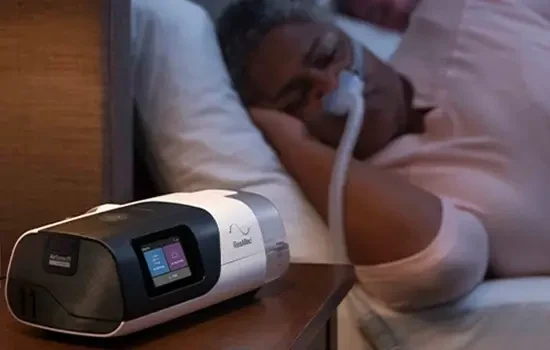
04Settings stay with your clinician
Do not change pressure, backup timing or oxygen arrangements based on a comparison article. If therapy is uncomfortable, ask your care team to review the fit and setup.
05Read a prescription and a quotation side by side
Create two columns: what the clinician requested and what the supplier is offering. Match the therapy mode first, then the exact model, interface and circuit. A familiar brand name, a high maximum pressure or a similar-looking case does not establish equivalence. If the quotation uses a different suffix or substitutes an accessory, ask for clarification before accepting it. This is especially useful when more than one relative is helping organise equipment and details are being passed through messages.
- Match the full model name, including letters after the number.
- Ask which accessories are essential and which are optional.
- Have clinical substitutions confirmed by the prescribing team.
06Separate equipment education from treatment decisions
A supplier can show you how parts connect, where to find the manual and what the display labels mean. Deciding which mode or pressure you need is a clinical task. If a device is being replaced, keep the old model details and the current prescription available rather than relying on memory. Ask who will perform and document the prescribed setup. Understanding this division of responsibility makes it easier to get a clear answer from the right person.
Sources & further reading
Use the current product instructions for the exact model and region.
Equipment education does not replace clinical advice. Your care team determines appropriate testing, therapy and settings.