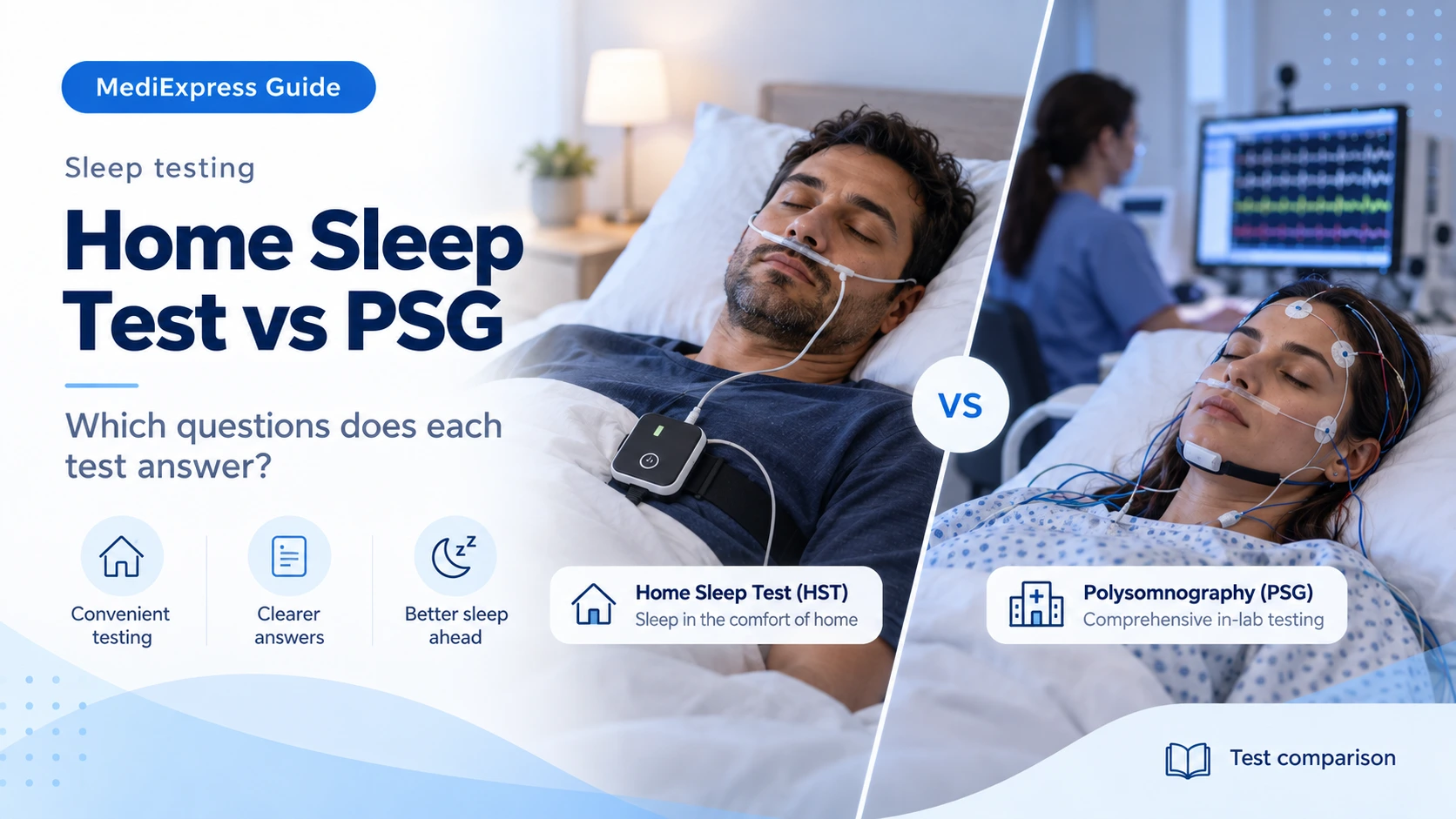
01A focused home study
A Level 3 home sleep test records a limited group of breathing-related signals. It is used in appropriate patients when the clinician wants to investigate possible sleep apnoea. It is not equivalent to a full sleep laboratory study.
02A broader PSG study
Polysomnography records a broader set of physiological signals, including sleep-related activity. The exact test type, location and monitoring arrangements should be confirmed when booking.
03The report needs interpretation
A study is not a diagnosis by itself. Your clinician should interpret the results alongside your history and decide whether further testing or treatment is needed. Ask what happens if the home recording is incomplete or inconclusive.
04Ask before arranging a test
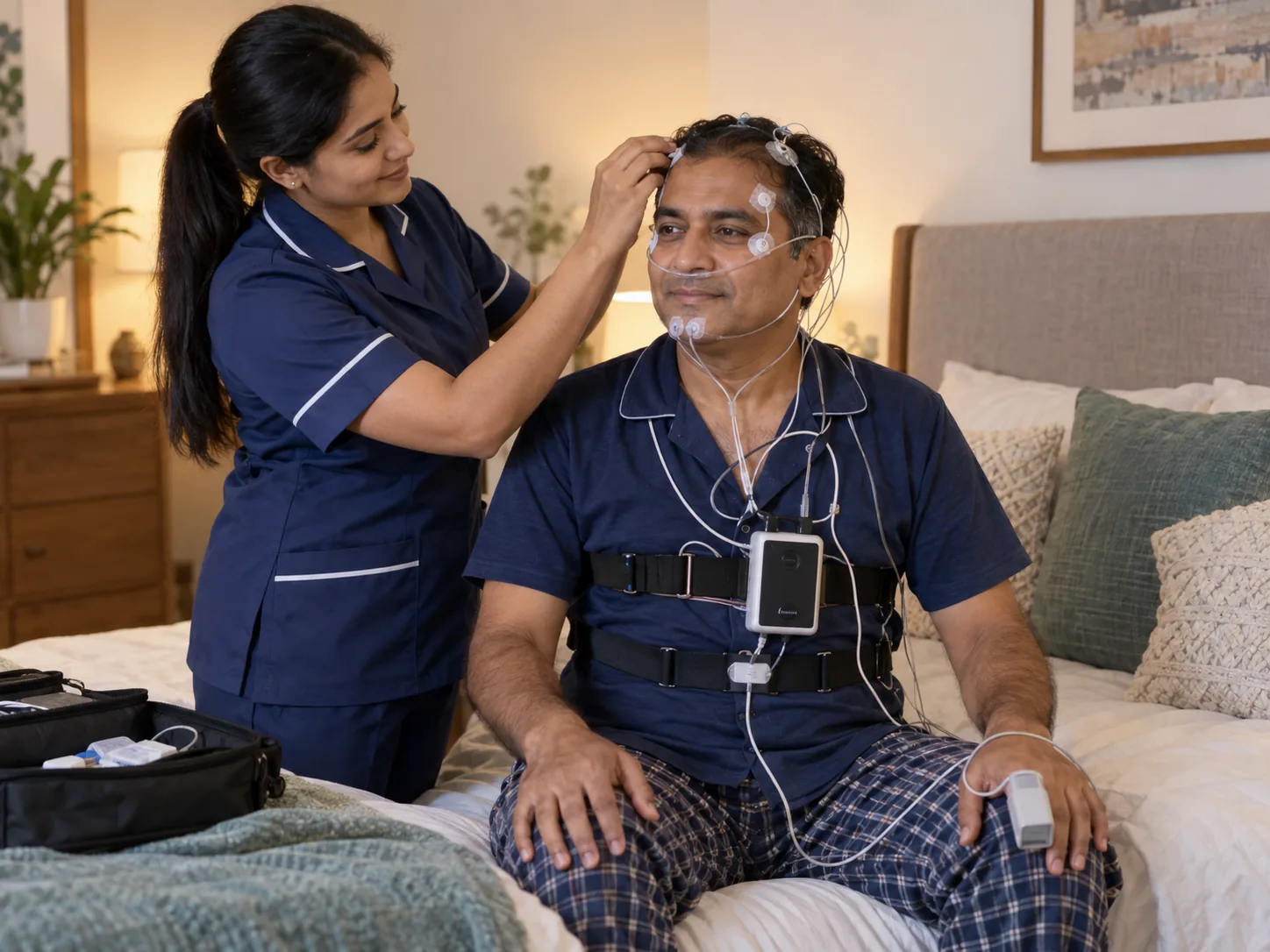
Confirm which test was requested, the equipment setup, preferred date, location, report process and total quoted charges. MediExpress coordinates enquiries for these services through alliance partner MediComfort; availability is confirmed separately.
05Know what the booking actually covers
Ask whether the appointment includes fitting, delivery, collection, report preparation and a clinician consultation, or whether any of those are separate. Confirm the requested study level and the location rather than relying on the phrase sleep test. Tell the coordinator about practical access needs and ask which preparation instructions will be provided. If the clinician requested PSG, do not substitute a limited home test simply because it is easier to arrange.
- Confirm the test name and level on the booking.
- Ask how to get help if a sensor comes loose.
- Clarify report timing, review arrangements and repeat-test terms.
06Prepare for the conversation after the recording
A report is most useful when reviewed in the context of your symptoms and medical history. Keep a note of anything unusual about the test night and follow the provider’s instructions for returning the equipment. Ask who will explain the result and what happens if the recording is incomplete. Equipment purchase should follow the clinician’s recommendation, rather than a family trying to interpret a single number from the report. The service coordinator can explain logistics; the clinical team explains what the study means for you.
Sources & further reading
Use the current product instructions for the exact model and region.
Equipment education does not replace clinical advice. Your care team determines appropriate testing, therapy and settings.