01Where the oxygen comes from
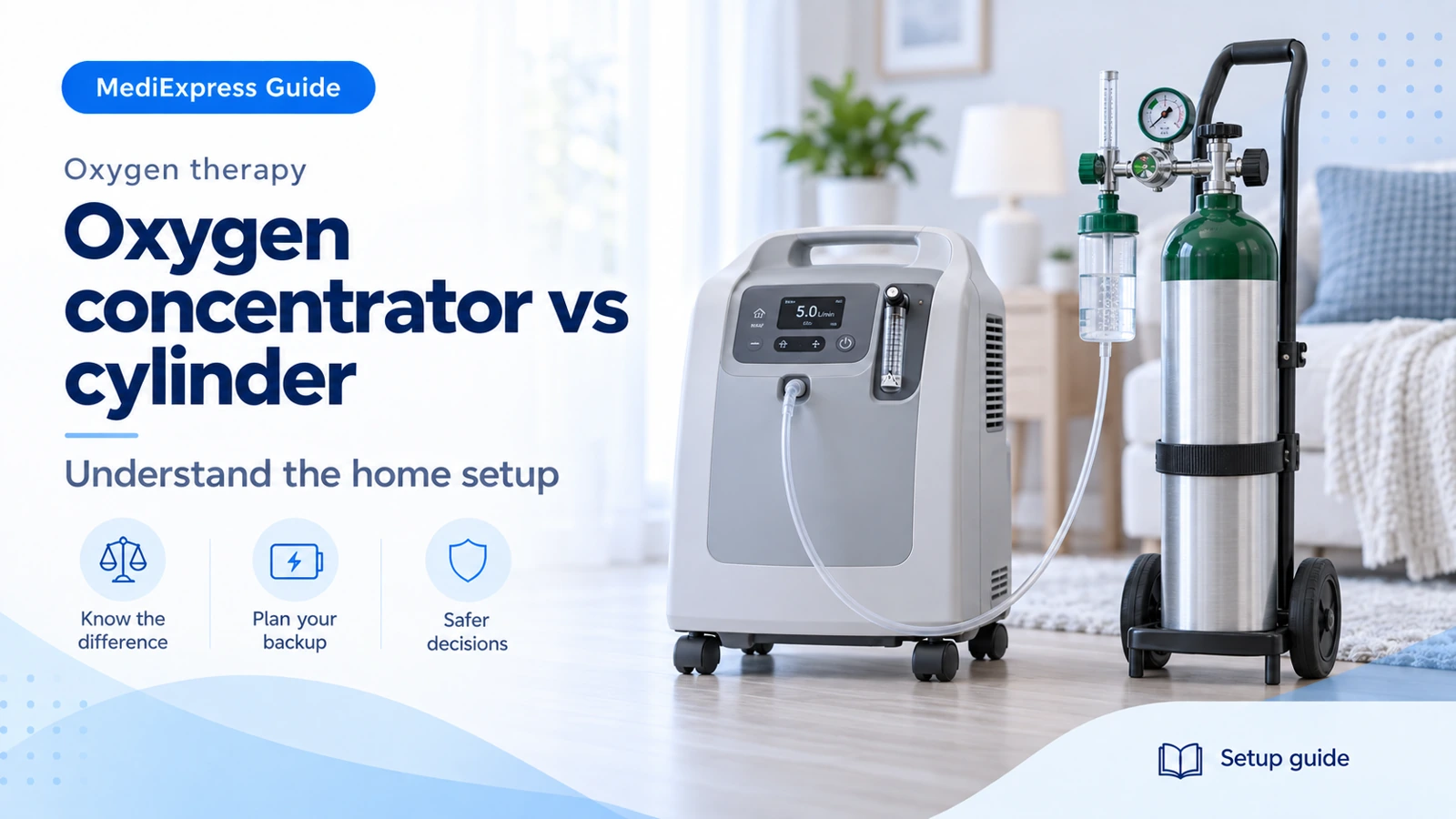
A concentrator separates oxygen from surrounding air and needs a power source. A cylinder stores a finite oxygen supply and needs the appropriate regulator and refill or replacement arrangement.
02Compare the practical requirements
Ask who will install or demonstrate the equipment, explain the controls and supply matching accessories. For cylinders, confirm the cylinder, regulator and safe handling arrangements. For concentrators, confirm electrical requirements and service support.
03Plan for interruptions
A concentrator can be affected by power failure or a fault. A cylinder can run out. Ask your care team to define the backup plan rather than assuming either source provides unlimited continuity.
04Use oxygen safely
Follow the prescribed flow and keep oxygen equipment away from smoking, flames and unsuitable products. Refer to the equipment instructions and your provider’s safety training. Contact the care team for clinical questions.
05Compare supply arrangements in writing
For a concentrator, ask about electricity, installation and the service route. For a cylinder, ask about the regulator, refill or exchange arrangements and safe handling instructions. Make the quotation list every required component instead of comparing only the main device price. Where more than one source is part of the care plan, ask the clinical team to explain when and how each is to be used. Do not improvise connections between systems.
- Who supplies and demonstrates the complete setup?
- What happens during an interruption or depletion?
- Which number should the caregiver call for equipment support?
06Make the handover usable for the family
Have the person who will help at home attend the demonstration. Ask them to identify the normal controls, supplied accessories and written support details. Keep the prescribed instructions separate from general supplier literature so they are easy to find. Confirm a location for the equipment that follows the provider’s safety guidance. The aim is a clear routine and an agreed contingency plan, rather than relying on someone to remember a hurried explanation on delivery day.
Sources & further reading
Use the current product instructions for the exact model and region.
Equipment education does not replace clinical advice. Your care team determines appropriate testing, therapy and settings.